Buy dg-solutions.eu ?
We are moving the project
dg-solutions.eu .
Are you interested in purchasing the domain
dg-solutions.eu ?
domain@kv-gmbh.de · 0541-91531010
Buy dg-solutions.eu ?
What is the pH value of salt solutions?
The pH value of salt solutions depends on the specific salt being dissolved. Some salts, such as sodium chloride (table salt), do not significantly affect the pH of a solution and have a neutral pH of around 7. However, other salts, such as sodium hydroxide or sodium bicarbonate, can significantly alter the pH of a solution. For example, sodium hydroxide can increase the pH, making the solution more basic, while sodium bicarbonate can act as a buffer and help maintain a relatively constant pH. **
What pH indicators are there with different solutions?
There are several pH indicators that can be used with different solutions. Some common pH indicators include phenolphthalein, which turns pink in basic solutions and is colorless in acidic solutions; bromothymol blue, which turns blue in basic solutions and yellow in acidic solutions; and litmus paper, which turns red in acidic solutions and blue in basic solutions. These indicators can be used to determine the pH of a solution by observing the color change. **
Similar search terms for PH
Top-Angebote
Products related to PH:
-
Revolution Jolly Blush Balm pH Lip & Cheek Balm blusher pH-reactive 1.5 gRevolution Jolly Blush Balm pH Lip & Cheek Balm, 1.5 g, Blushers for Women, Do you want to give your face a healthy, fresh appearance? The Revolution Jolly Blush Balm pH Lip & Cheek Balm blusher is here to help. It envelops your cheeks in a soft hint of colour similar to the natural blushing process. But it’s also useful for highlighting features and visually altering the shape of your face, for example when you want your cheeks to appear lifted. Just apply a few layers with a brush or sponge and your cheeks will get a refreshed appearance to enhance any makeup style. Characteristics: adapts to your skin tone gives your face a healthy colour creates a naturally blushing look brightens has a pleasantly soft, lightweight texture How to use: Apply to the cheekbones, upper cheeks, the bridge and tip of the nose, under the eyebrows and the inner corners of the eyes for the perfect brightening effect.8,10 £*Shipping: 3,99 £Secure redirect to the provider
-
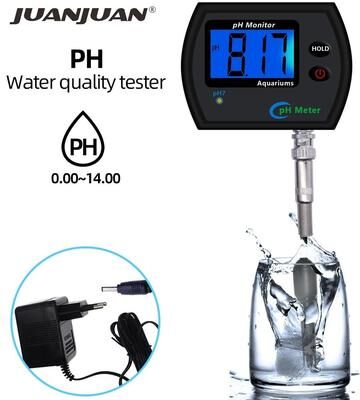
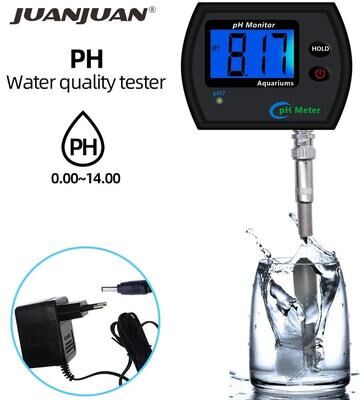
Uplift Picks AquaWatch Online Aquarium PH Monitor And Continuous PH Meter us PlugKeep changing water conditions visible without repeatedly reaching for a handheld test pen. AquaWatch uses an immersed probe and powered display to provide ongoing pH readings from your aquarium or water system. This water quality monitor is...153,99 $*Shipping: 0,00 $Secure redirect to the provider
-
Uplift Picks AquaCheck Digital PH Meter And TDS Water Tester Set ph MeterTake the guesswork out of everyday water checks with fast, easytoread measurements. AquaCheck helps aquarium keepers, hydroponic growers, and homeowners monitor pH, dissolved solids, and conductivity. The portable penstyle testers feature clear LCD...56,49 $*Shipping: 0,00 $Secure redirect to the provider
-
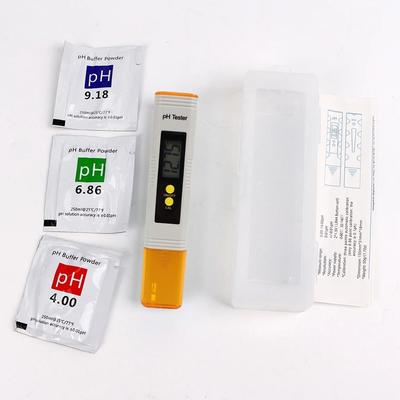
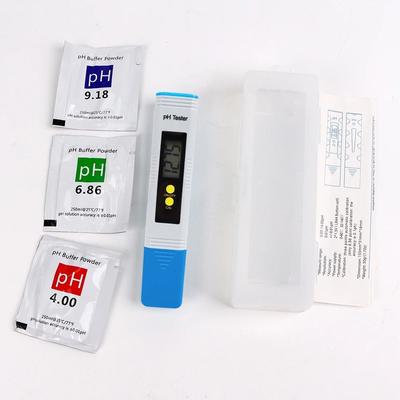
Uplift Picks AquaCheck Digital PH Meter And 0.01 PH Water Tester blueTake the guesswork out of checking water balance. AquaCheck is a compact water quality tester with clear numerical readings on an LCD. Its 0.01 resolution supports detailed monitoring, while automatic calibration simplifies setup. It suits aquarium...57,98 $*Shipping: 0,00 $Secure redirect to the provider


-
How do you calculate the pH value of solutions?
The pH value of a solution is calculated using the formula pH = -log[H+], where [H+] represents the concentration of hydrogen ions in the solution. To calculate the pH, you first need to measure the concentration of hydrogen ions in the solution using a pH meter or indicators. Then, you take the negative logarithm of the hydrogen ion concentration to obtain the pH value. A pH value below 7 indicates acidity, while a pH value above 7 indicates alkalinity. **
-
How do I calculate the pH value of these solutions?
To calculate the pH value of a solution, you can use the formula pH = -log[H+], where [H+] represents the concentration of hydrogen ions in the solution. If you know the concentration of hydrogen ions, you can plug that value into the formula to find the pH. Alternatively, if you know the concentration of hydroxide ions ([OH-]), you can use the formula pH = 14 - pOH, where pOH = -log[OH-], to calculate the pH. Remember that pH values range from 0 to 14, with values below 7 indicating acidity, 7 being neutral, and values above 7 indicating alkalinity. **
-
How do I calculate the pH value of the following aqueous solutions?
To calculate the pH value of an aqueous solution, you can use the formula pH = -log[H+], where [H+] is the concentration of hydrogen ions in the solution. If you know the concentration of a strong acid or base in the solution, you can use that to calculate the pH directly. If you have a weak acid or base, you will need to use the equilibrium constant (Ka or Kb) to calculate the concentration of hydrogen ions and then find the pH using the formula. Additionally, if the solution contains a salt, you will need to consider the hydrolysis of the salt to calculate the pH. **
-
How are the pH values of acidic solutions with the same initial concentration?
The pH values of acidic solutions with the same initial concentration will vary depending on the strength of the acid. Stronger acids will have lower pH values, indicating a higher concentration of hydrogen ions. Weaker acids will have higher pH values, indicating a lower concentration of hydrogen ions. Therefore, even though the initial concentration of the acidic solutions may be the same, their pH values will differ based on the strength of the acid. **

How to calculate c(H3O+) for each of the aqueous solutions with the following information: pH = 0.5, pH = 11.3, pOH = 5, c(OH-) = 0.015 mol/l?
To calculate c(H3O+) for each of the aqueous solutions, we can use the relationship between pH and c(H3O+). For the solution with pH = 0.5, we can use the formula c(H3O+) = 10^(-pH) to find that c(H3O+) = 10^(-0.5) = 0.316 mol/l. For the solution with pH = 11.3, we can use the same formula to find c(H3O+) = 10^(-11.3) = 5.01 x 10^(-12) mol/l. For the solution with pOH = 5, we can use the relationship pOH = -log(c(OH-)) to find c(OH-) = 10^(-5) = 0.00001 mol/l. Then, we can use the relationship c(H3O+) x c(OH-) = 1.0 **
How do you calculate c(H3O+) for each of the aqueous solutions with the following information: pH = 0.5, pH = 11.3, pOH = 5, c(OH-) = 0.015 mol/l?
To calculate the concentration of H3O+ for each of the aqueous solutions, you can use the formula c(H3O+) = 10^(-pH). For the solution with pH = 0.5, the concentration of H3O+ would be 10^(-0.5) = 0.316 mol/l. For the solution with pH = 11.3, the concentration of H3O+ would be 10^(-11.3) = 5.01 x 10^(-12) mol/l. For the solution with pOH = 5, you can use the relationship pH + pOH = 14 to find the pH, which would be 14 - 5 = 9. Then, the concentration of H3O+ would be 10^(-9) = 1 x 10^(-9) mol/l. **
Top-Angebote
Products related to PH:
-
Uplift Picks AquaCheck Digital PH Meter And 0.01 PH Water Tester yellowTake the guesswork out of checking water balance. AquaCheck is a compact water quality tester with clear numerical readings on an LCD. Its 0.01 resolution supports detailed monitoring, while automatic calibration simplifies setup. It suits aquarium...57,98 $*Shipping: 0,00 $Secure redirect to the provider
-
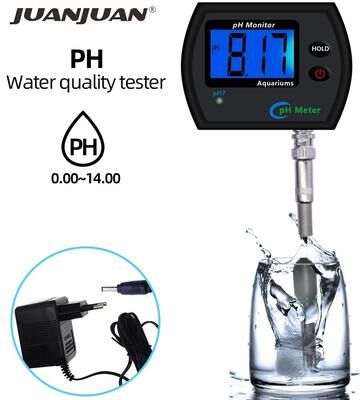
Uplift Picks AquaWatch Online PH Monitor And Aquarium PH Meter us PlugKeep a closer eye on changing water conditions without repeated handheld testing. This continuous water quality monitoruses an immersed probe to display pH readings from 0.00 to 14.00. Its clear digital screen makes routine checks quick for aquarium...150,00 $*Shipping: 0,00 $Secure redirect to the provider
-
Revolution Jolly Blush Balm pH Lip & Cheek Balm blusher pH-reactive 1.5 gRevolution Jolly Blush Balm pH Lip & Cheek Balm, 1.5 g, Blushers for Women, Do you want to give your face a healthy, fresh appearance? The Revolution Jolly Blush Balm pH Lip & Cheek Balm blusher is here to help. It envelops your cheeks in a soft hint of colour similar to the natural blushing process. But it’s also useful for highlighting features and visually altering the shape of your face, for example when you want your cheeks to appear lifted. Just apply a few layers with a brush or sponge and your cheeks will get a refreshed appearance to enhance any makeup style. Characteristics: adapts to your skin tone gives your face a healthy colour creates a naturally blushing look brightens has a pleasantly soft, lightweight texture How to use: Apply to the cheekbones, upper cheeks, the bridge and tip of the nose, under the eyebrows and the inner corners of the eyes for the perfect brightening effect.8,10 £*Shipping: 3,99 £Secure redirect to the provider
-
Uplift Picks AquaWatch Online Aquarium PH Monitor And Continuous PH Meter us PlugKeep changing water conditions visible without repeatedly reaching for a handheld test pen. AquaWatch uses an immersed probe and powered display to provide ongoing pH readings from your aquarium or water system. This water quality monitor is...153,99 $*Shipping: 0,00 $Secure redirect to the provider
-
What is the pH value of salt solutions?
The pH value of salt solutions depends on the specific salt being dissolved. Some salts, such as sodium chloride (table salt), do not significantly affect the pH of a solution and have a neutral pH of around 7. However, other salts, such as sodium hydroxide or sodium bicarbonate, can significantly alter the pH of a solution. For example, sodium hydroxide can increase the pH, making the solution more basic, while sodium bicarbonate can act as a buffer and help maintain a relatively constant pH. **
-
What pH indicators are there with different solutions?
There are several pH indicators that can be used with different solutions. Some common pH indicators include phenolphthalein, which turns pink in basic solutions and is colorless in acidic solutions; bromothymol blue, which turns blue in basic solutions and yellow in acidic solutions; and litmus paper, which turns red in acidic solutions and blue in basic solutions. These indicators can be used to determine the pH of a solution by observing the color change. **
-
How do you calculate the pH value of solutions?
The pH value of a solution is calculated using the formula pH = -log[H+], where [H+] represents the concentration of hydrogen ions in the solution. To calculate the pH, you first need to measure the concentration of hydrogen ions in the solution using a pH meter or indicators. Then, you take the negative logarithm of the hydrogen ion concentration to obtain the pH value. A pH value below 7 indicates acidity, while a pH value above 7 indicates alkalinity. **
-
How do I calculate the pH value of these solutions?
To calculate the pH value of a solution, you can use the formula pH = -log[H+], where [H+] represents the concentration of hydrogen ions in the solution. If you know the concentration of hydrogen ions, you can plug that value into the formula to find the pH. Alternatively, if you know the concentration of hydroxide ions ([OH-]), you can use the formula pH = 14 - pOH, where pOH = -log[OH-], to calculate the pH. Remember that pH values range from 0 to 14, with values below 7 indicating acidity, 7 being neutral, and values above 7 indicating alkalinity. **
Similar search terms for PH
-
Uplift Picks AquaCheck Digital PH Meter And TDS Water Tester Set ph MeterTake the guesswork out of everyday water checks with fast, easytoread measurements. AquaCheck helps aquarium keepers, hydroponic growers, and homeowners monitor pH, dissolved solids, and conductivity. The portable penstyle testers feature clear LCD...56,49 $*Shipping: 0,00 $Secure redirect to the provider
-
Uplift Picks AquaCheck Digital PH Meter And 0.01 PH Water Tester blueTake the guesswork out of checking water balance. AquaCheck is a compact water quality tester with clear numerical readings on an LCD. Its 0.01 resolution supports detailed monitoring, while automatic calibration simplifies setup. It suits aquarium...57,98 $*Shipping: 0,00 $Secure redirect to the provider
-
Uplift Picks AquaWatch Online PH Monitor And Aquarium PH Meter eu PlugKeep a closer eye on changing water conditions without repeated handheld testing. This continuous water quality monitoruses an immersed probe to display pH readings from 0.00 to 14.00. Its clear digital screen makes routine checks quick for aquarium...150,00 $*Shipping: 0,00 $Secure redirect to the provider
-
Uplift Picks AquaCheck Digital PH Meter And 0.01 PH Water Tester dark BlueTake the guesswork out of checking water balance. AquaCheck is a compact water quality tester with clear numerical readings on an LCD. Its 0.01 resolution supports detailed monitoring, while automatic calibration simplifies setup. It suits aquarium...57,98 $*Shipping: 0,00 $Secure redirect to the provider
-
How do I calculate the pH value of the following aqueous solutions?
To calculate the pH value of an aqueous solution, you can use the formula pH = -log[H+], where [H+] is the concentration of hydrogen ions in the solution. If you know the concentration of a strong acid or base in the solution, you can use that to calculate the pH directly. If you have a weak acid or base, you will need to use the equilibrium constant (Ka or Kb) to calculate the concentration of hydrogen ions and then find the pH using the formula. Additionally, if the solution contains a salt, you will need to consider the hydrolysis of the salt to calculate the pH. **
-
How are the pH values of acidic solutions with the same initial concentration?
The pH values of acidic solutions with the same initial concentration will vary depending on the strength of the acid. Stronger acids will have lower pH values, indicating a higher concentration of hydrogen ions. Weaker acids will have higher pH values, indicating a lower concentration of hydrogen ions. Therefore, even though the initial concentration of the acidic solutions may be the same, their pH values will differ based on the strength of the acid. **
-
How to calculate c(H3O+) for each of the aqueous solutions with the following information: pH = 0.5, pH = 11.3, pOH = 5, c(OH-) = 0.015 mol/l?
To calculate c(H3O+) for each of the aqueous solutions, we can use the relationship between pH and c(H3O+). For the solution with pH = 0.5, we can use the formula c(H3O+) = 10^(-pH) to find that c(H3O+) = 10^(-0.5) = 0.316 mol/l. For the solution with pH = 11.3, we can use the same formula to find c(H3O+) = 10^(-11.3) = 5.01 x 10^(-12) mol/l. For the solution with pOH = 5, we can use the relationship pOH = -log(c(OH-)) to find c(OH-) = 10^(-5) = 0.00001 mol/l. Then, we can use the relationship c(H3O+) x c(OH-) = 1.0 **
-
How do you calculate c(H3O+) for each of the aqueous solutions with the following information: pH = 0.5, pH = 11.3, pOH = 5, c(OH-) = 0.015 mol/l?
To calculate the concentration of H3O+ for each of the aqueous solutions, you can use the formula c(H3O+) = 10^(-pH). For the solution with pH = 0.5, the concentration of H3O+ would be 10^(-0.5) = 0.316 mol/l. For the solution with pH = 11.3, the concentration of H3O+ would be 10^(-11.3) = 5.01 x 10^(-12) mol/l. For the solution with pOH = 5, you can use the relationship pH + pOH = 14 to find the pH, which would be 14 - 5 = 9. Then, the concentration of H3O+ would be 10^(-9) = 1 x 10^(-9) mol/l. **
* All prices are inclusive of VAT and, if applicable, plus shipping costs. The offer information is based on the details provided by the respective shop and is updated through automated processes. Real-time updates do not occur, so deviations can occur in individual cases. ** Note: Parts of this content were created by AI.