Buy dg-solutions.eu ?
We are moving the project
dg-solutions.eu .
Are you interested in purchasing the domain
dg-solutions.eu ?
domain@kv-gmbh.de · 0541-91531010
Buy dg-solutions.eu ?
What are the stages of cognitive development?
The stages of cognitive development, as proposed by psychologist Jean Piaget, are as follows: 1. Sensorimotor stage (birth to 2 years): During this stage, infants learn about the world through their senses and actions. They develop object permanence and begin to understand cause and effect. 2. Preoperational stage (2 to 7 years): Children in this stage begin to use language and symbols to represent objects and ideas. They also develop egocentrism, where they have difficulty seeing things from others' perspectives. 3. Concrete operational stage (7 to 11 years): In this stage, children begin to think logically about concrete events and understand conservation. They can also understand the concept of reversibility. 4. Formal operational stage (11 years and older): During this stage, individuals can think abstractly and use hypothetical reasoning. They can also engage in deductive reasoning and problem-solving. **
What is Erikson's stages of psychosocial development model?
Erikson's stages of psychosocial development model is a theory that outlines the eight stages of human development from infancy to old age. Each stage represents a specific psychosocial crisis or challenge that individuals must navigate in order to develop a healthy sense of self and relationships with others. These stages include trust vs. mistrust, autonomy vs. shame and doubt, initiative vs. guilt, industry vs. inferiority, identity vs. role confusion, intimacy vs. isolation, generativity vs. stagnation, and integrity vs. despair. Erikson believed that successfully resolving these crises at each stage leads to the development of important virtues and a sense of personal competence. **


Similar search terms for Stages
Top-Angebote
Products related to Stages:
-
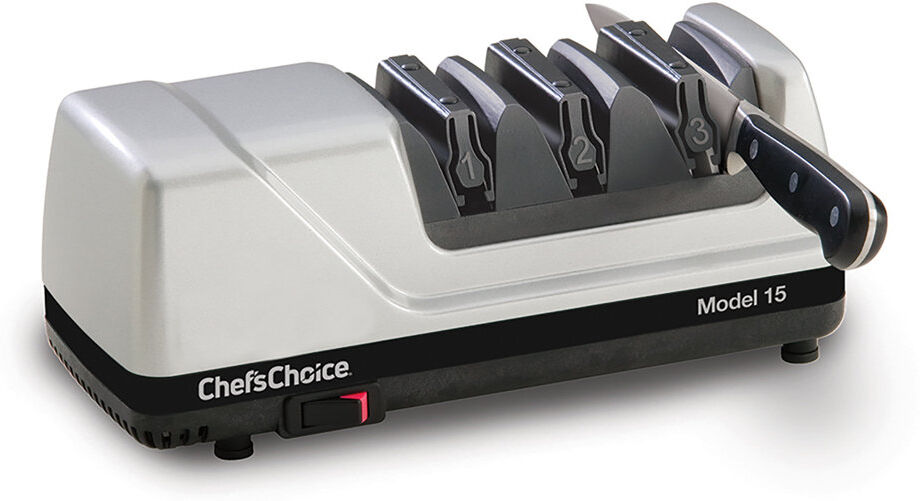
Chef's Choice 3 Stages Electric Knife Sharpener Silver;BlackA new Chef's Choice Trizor XV knife sharpener. This Trizor XV Sharpener allows you to both hone and sharpen your knives using the latest XV technology. Taking only a minute to sharpen your knives for the first time, sharpening will take approximately 10 seconds. Turning 20 households knives into 15 high performance knives. A Trizor engineered knife sharpener with 3 distinct facets set at different angles that form a triple bevel, arch- shape edge. An advanced knife sharpener with a patented flexible spring guides for accurate control, this Trizor Knife sharpener creates perfectly cut blades for every cutting task. This knife sharpener is made with a 3.12 carat, 100% diamond abrasive, perfect for when sharpening both straight and serrated blades. With a 3-stage process and patented stropping disks that create an unparalleled polished knife edge. Use this Trizor knife sharpener to sharpen chef's knives, Santoku knives, serrated knives, cleavers and sports knives. 125 wattage, BPA free, 3-year warranty included. Chef's Choice192,99 £*Shipping: 0,00 £Secure redirect to the provider
-
JOICO Cliniscalp Trial Pack for Natural Hair Advanced StagesJOICO Cliniscalp Trial Pack for Natural Hair Advanced Stages contains all you need to start fighting the advanced signs of natural thinning hair. Contains: JOICO Cliniscalp Purifying Scalp Cleanse for Natural Thinning Hair JOICO Cliniscalp Balancing Scalp Nourish for Natural Thinning Hair JOICO Cliniscalp Advanced Thinning.19,35 £*Shipping: 2,95 £Secure redirect to the provider



-
Can you explain Kohlberg's stages of moral development?
Kohlberg's stages of moral development are a theory that outlines the progression of moral reasoning in individuals. The theory consists of three levels, each with two stages. The first level is the pre-conventional level, where individuals make decisions based on self-interest and avoiding punishment. The second level is the conventional level, where individuals make decisions based on societal norms and expectations. The third level is the post-conventional level, where individuals make decisions based on universal ethical principles. Kohlberg's theory suggests that individuals progress through these stages as they mature and develop their moral reasoning abilities. **
-
How does the lighting technology work on stages?
Stage lighting technology works by using a combination of different types of lights, such as spotlights, floodlights, and LED lights, to create the desired atmosphere and mood for a performance. Lighting designers use a control board to adjust the intensity, color, and direction of the lights to enhance the visual impact of the performance. They also use techniques such as gels, gobos, and moving lights to create dynamic and visually engaging effects. Overall, stage lighting technology is a crucial element in bringing a performance to life and capturing the audience's attention. **
-
Why are the higher protolysis stages little or not at all represented in acid solutions?
The higher protolysis stages, such as the second and third stages, are little or not at all represented in acid solutions because the concentration of H+ ions in acid solutions is high. This high concentration of H+ ions suppresses the dissociation of additional protons from the acid molecules, leading to a limited representation of higher protolysis stages. As a result, the acid solution primarily contains the initial protolysis stage, where only a small fraction of the acid molecules have donated a proton. **
-
What are the stages of a child's language development?
The stages of a child's language development typically include the prelinguistic stage, the babbling stage, the holophrastic or one-word stage, the two-word stage, and the telegraphic stage. During the prelinguistic stage, infants communicate through crying, cooing, and gestures. The babbling stage involves the repetition of syllables and sounds. In the holophrastic stage, children begin to use single words to convey meaning, followed by the two-word stage where they combine words. Finally, in the telegraphic stage, children start to form more complete sentences and use basic grammar rules. **


What are the stages of language development in a child?
Language development in a child typically progresses through several stages. The first stage is the prelinguistic stage, where infants communicate through crying, cooing, and babbling. The next stage is the holophrastic stage, where children use single words to convey whole sentences. This is followed by the telegraphic stage, where children start combining words to form simple sentences. Finally, children reach the post-telegraphic stage, where they develop more complex grammar and vocabulary skills. **
What is your opinion on Kohlberg's stages of moral development model?
Kohlberg's stages of moral development model provides a valuable framework for understanding how individuals develop their moral reasoning and ethical decision-making. The model's emphasis on the progression from a focus on self-interest to a consideration of universal ethical principles reflects the complexity and nuance of moral development. However, some critics argue that the model may not adequately account for cultural and contextual influences on moral reasoning. Overall, while Kohlberg's stages of moral development model offers important insights into the process of moral growth, it is important to consider its limitations and the need for a more comprehensive understanding of moral development. **
Top-Angebote
Products related to Stages:
-
Graco Travel Lite Crib with Stages - LaurenWith 3 growing stages, the Graco Travel Lite Crib with Stages is specially designed to grow with your baby from newborn to young toddler! Each stage provides a safe, cozy, yet portable spot for baby to sleep by your side. Plus, the Travel Lite Crib...147,99 $*Shipping: 0,00 $Secure redirect to the provider
-
Titan 24 Foot Scaffolding Pump Jack Kit With StagesThe Titan 24-Foot Pump Jack Kit is the ultimate all-in-one scaffolding solution for professionals in construction painting siding or roofing who demand performance safety and reliability. This OSHA-compliant aluminum pump jack system includes every...3277,06 $*Shipping: 0,00 $Secure redirect to the provider
-
Chef's Choice 3 Stages Electric Knife Sharpener Silver;BlackA new Chef's Choice Trizor XV knife sharpener. This Trizor XV Sharpener allows you to both hone and sharpen your knives using the latest XV technology. Taking only a minute to sharpen your knives for the first time, sharpening will take approximately 10 seconds. Turning 20 households knives into 15 high performance knives. A Trizor engineered knife sharpener with 3 distinct facets set at different angles that form a triple bevel, arch- shape edge. An advanced knife sharpener with a patented flexible spring guides for accurate control, this Trizor Knife sharpener creates perfectly cut blades for every cutting task. This knife sharpener is made with a 3.12 carat, 100% diamond abrasive, perfect for when sharpening both straight and serrated blades. With a 3-stage process and patented stropping disks that create an unparalleled polished knife edge. Use this Trizor knife sharpener to sharpen chef's knives, Santoku knives, serrated knives, cleavers and sports knives. 125 wattage, BPA free, 3-year warranty included. Chef's Choice192,99 £*Shipping: 0,00 £Secure redirect to the provider
-
JOICO Cliniscalp Trial Pack for Natural Hair Advanced StagesJOICO Cliniscalp Trial Pack for Natural Hair Advanced Stages contains all you need to start fighting the advanced signs of natural thinning hair. Contains: JOICO Cliniscalp Purifying Scalp Cleanse for Natural Thinning Hair JOICO Cliniscalp Balancing Scalp Nourish for Natural Thinning Hair JOICO Cliniscalp Advanced Thinning.19,35 £*Shipping: 2,95 £Secure redirect to the provider
-
What are the stages of cognitive development?
The stages of cognitive development, as proposed by psychologist Jean Piaget, are as follows: 1. Sensorimotor stage (birth to 2 years): During this stage, infants learn about the world through their senses and actions. They develop object permanence and begin to understand cause and effect. 2. Preoperational stage (2 to 7 years): Children in this stage begin to use language and symbols to represent objects and ideas. They also develop egocentrism, where they have difficulty seeing things from others' perspectives. 3. Concrete operational stage (7 to 11 years): In this stage, children begin to think logically about concrete events and understand conservation. They can also understand the concept of reversibility. 4. Formal operational stage (11 years and older): During this stage, individuals can think abstractly and use hypothetical reasoning. They can also engage in deductive reasoning and problem-solving. **
-
What is Erikson's stages of psychosocial development model?
Erikson's stages of psychosocial development model is a theory that outlines the eight stages of human development from infancy to old age. Each stage represents a specific psychosocial crisis or challenge that individuals must navigate in order to develop a healthy sense of self and relationships with others. These stages include trust vs. mistrust, autonomy vs. shame and doubt, initiative vs. guilt, industry vs. inferiority, identity vs. role confusion, intimacy vs. isolation, generativity vs. stagnation, and integrity vs. despair. Erikson believed that successfully resolving these crises at each stage leads to the development of important virtues and a sense of personal competence. **
-
Can you explain Kohlberg's stages of moral development?
Kohlberg's stages of moral development are a theory that outlines the progression of moral reasoning in individuals. The theory consists of three levels, each with two stages. The first level is the pre-conventional level, where individuals make decisions based on self-interest and avoiding punishment. The second level is the conventional level, where individuals make decisions based on societal norms and expectations. The third level is the post-conventional level, where individuals make decisions based on universal ethical principles. Kohlberg's theory suggests that individuals progress through these stages as they mature and develop their moral reasoning abilities. **
-
How does the lighting technology work on stages?
Stage lighting technology works by using a combination of different types of lights, such as spotlights, floodlights, and LED lights, to create the desired atmosphere and mood for a performance. Lighting designers use a control board to adjust the intensity, color, and direction of the lights to enhance the visual impact of the performance. They also use techniques such as gels, gobos, and moving lights to create dynamic and visually engaging effects. Overall, stage lighting technology is a crucial element in bringing a performance to life and capturing the audience's attention. **
Similar search terms for Stages
-
Lifestyle Solutions Napa LoveseatThe Napa Loveseat is designed not only to fit your space but also your style. The classic design and modern lines not only offer style but comfort. A hardwood frames offers sturdy support for everyday living.308,34 $*Shipping: 0,00 $Secure redirect to the provider
-
HARMAN Professional Solutions Cosmetic BagYou will love these stylish and classy portable hangable cosmetic bags. Easily and quickly store all your beauty essentials in this perfect multipurpose bag. Great for travel the medium sized cosmetics bag has several storage pockets for easy access and storage. Made of waterproof polyester fabric and featuring a fully lined wipe clean interior this bag is perfect for use in the bathroom travel and other occasions. Easy to hang with built-in hook Made of waterproof polyester Perfect travel cosmetic bag Multiple pockets and storage areas975,99 £*Shipping: 0,00 £Secure redirect to the provider
-
Why are the higher protolysis stages little or not at all represented in acid solutions?
The higher protolysis stages, such as the second and third stages, are little or not at all represented in acid solutions because the concentration of H+ ions in acid solutions is high. This high concentration of H+ ions suppresses the dissociation of additional protons from the acid molecules, leading to a limited representation of higher protolysis stages. As a result, the acid solution primarily contains the initial protolysis stage, where only a small fraction of the acid molecules have donated a proton. **
-
What are the stages of a child's language development?
The stages of a child's language development typically include the prelinguistic stage, the babbling stage, the holophrastic or one-word stage, the two-word stage, and the telegraphic stage. During the prelinguistic stage, infants communicate through crying, cooing, and gestures. The babbling stage involves the repetition of syllables and sounds. In the holophrastic stage, children begin to use single words to convey meaning, followed by the two-word stage where they combine words. Finally, in the telegraphic stage, children start to form more complete sentences and use basic grammar rules. **
-
What are the stages of language development in a child?
Language development in a child typically progresses through several stages. The first stage is the prelinguistic stage, where infants communicate through crying, cooing, and babbling. The next stage is the holophrastic stage, where children use single words to convey whole sentences. This is followed by the telegraphic stage, where children start combining words to form simple sentences. Finally, children reach the post-telegraphic stage, where they develop more complex grammar and vocabulary skills. **
-
What is your opinion on Kohlberg's stages of moral development model?
Kohlberg's stages of moral development model provides a valuable framework for understanding how individuals develop their moral reasoning and ethical decision-making. The model's emphasis on the progression from a focus on self-interest to a consideration of universal ethical principles reflects the complexity and nuance of moral development. However, some critics argue that the model may not adequately account for cultural and contextual influences on moral reasoning. Overall, while Kohlberg's stages of moral development model offers important insights into the process of moral growth, it is important to consider its limitations and the need for a more comprehensive understanding of moral development. **
* All prices are inclusive of VAT and, if applicable, plus shipping costs. The offer information is based on the details provided by the respective shop and is updated through automated processes. Real-time updates do not occur, so deviations can occur in individual cases. ** Note: Parts of this content were created by AI.